
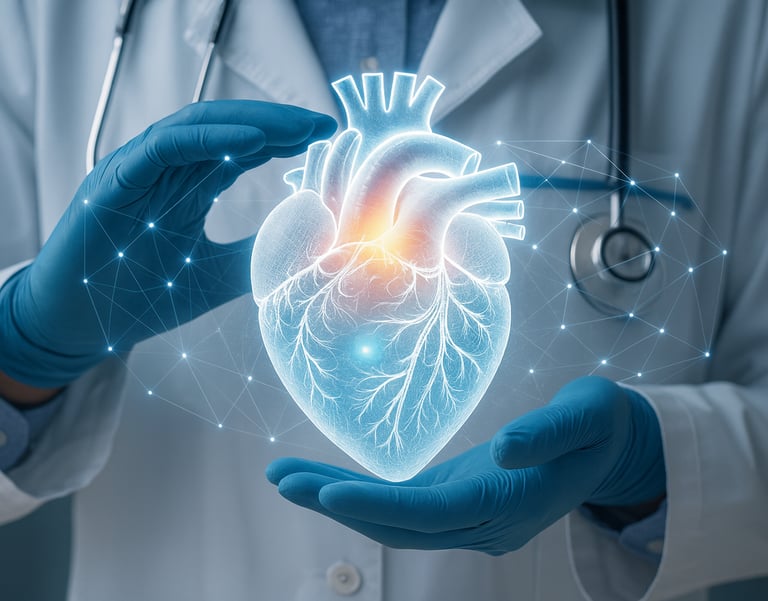
Cardiology Department deals uses cardiology outpatient services, echocardiography laboratory, stress test, rhythm and blood pressure Holter monitoring, invasive cardiac procedures (femoral and radial angiography, angioplasty, stent), invasive procedures for peripheral blood vessels and cardiac pacemaker implantation for diagnosis and treatment of all cardiovascular diseases.
Cardiology is a medical specialty concerned with various diseases related to high blood pressure, heart failures, heart valves, and heart arteries. Doctors specializing in cardiology are called cardiologists. The primary care of cardiovascular diseases, the improvement of heart functions, and modifications are carried out by a cardiologist. Methods such as physical examination and electrocardiogram are used in the detection of diseases in the field of cardiology. Blood tests are also preferred in cardiology centers to rule out certain disease suspicions and make accurate diagnoses. Cardiology and cardiac surgery are often confused. While the cardiology department intervenes in heart diseases with drug treatment and angiography, the cardiac surgery department uses surgical interventions and operations for diseases. Additionally, a cardiology professor can perform the care and follow-up of a patient who has undergone surgery by the cardiac surgery department.
What is Cardiology?
Cardiology is a medical specialty concerned with various diseases related to high blood pressure, heart failures, heart valves, and heart arteries. Doctors specializing in cardiology are called cardiologists. The primary care of cardiovascular diseases, the improvement of heart functions, and modifications are carried out by a cardiologist. Methods such as physical examination and electrocardiogram are used in the detection of diseases in the field of cardiology. Blood tests are also preferred in cardiology centers to rule out certain disease suspicions and make accurate diagnoses. Cardiology and cardiac surgery are often confused. While the cardiology department intervenes in heart diseases with drug treatment and angiography, the cardiac surgery department uses surgical interventions and operations for diseases. Additionally, a cardiology professor can perform the care and follow-up of a patient who has undergone surgery by the cardiac surgery department.
What Diseases Does Cardiology Deal With?
Cardiology deals with congenital or acquired diseases that affect the heart and circulatory system. Diseases that impact heart function and cause disruptions in the circulatory system fall under the scope of cardiology. Some diseases within the scope of cardiology include:
High blood pressure
Atherosclerosis
Heart attack and related issues
Clotting problems
Atrial fibrillation and heart rhythm disorders
Heart valve problems
Endocarditis
Congenital heart diseases
Angina pectoris
Cardiomyopathy
Aortic stenosis and insufficiency
Myocardial infarction
Ischemic heart diseases
Cardiac arrest
Heart muscle inflammation
Peripheral artery disease
Stroke
Cardiac tumors
How Are Cardiological Diseases Diagnosed?
For the diagnosis of cardiological diseases, physical examination, patient history, and some electronic imaging methods are used. Some devices preferred for diagnosis in cardiology include:
Stethoscope: Used to listen to normal and abnormal heartbeats. It is a simple diagnostic tool.
Electrocardiogram (ECG): Measures the electrical activity occurring during a heartbeat.
Echocardiogram: An ultrasound device using sound waves to visualize heart and blood movements.
Holter device: A portable ECG device that monitors heartbeats for 24 hours, recording the heart’s condition throughout the day and investigating rhythm disorders.
X-ray device: Used to observe the effect of heart disease on the lungs.
Stress test: Preferred to monitor heart activity during physical activities.
Magnetic resonance imaging (MRI): Provides detailed imaging of tissues, especially soft tissues, using radio waves.
Transesophageal echo (TEE): An ultrasound type that provides imaging through a thin tube inserted into the esophagus via the mouth.
Cardiac CT (computed tomography): A tomographic imaging technique applied with contrast material to examine anatomical disorders in the heart and detect calcium deposits in the coronary arteries.
Nuclear medicine: Myocardial perfusion scintigraphy is used in certain situations to investigate nutritional disorders in the heart walls and serious heart diseases.
How Are Cardiological Diseases Treated?
The treatment of cardiological diseases is carried out in a multi-faceted manner. In addition to drug treatment, certain lifestyle changes are necessary. The treatment stages of cardiological diseases can be classified as follows:
Diet: Heart diseases often bring complaints of edema and high blood pressure. A diet restricted in sodium is preferred to alleviate these complaints. Cholesterol levels should also be kept below certain levels for heart health. Therefore, the consumption of processed meats, fried products, and other foods that can raise cholesterol is reduced. Excessive weight is a risk factor for heart diseases, so a diet supporting weight loss is preferred in obese patients.
Exercise: A sedentary lifestyle can be a risk factor for heart health. Increasing daily activity and opting for walks in the open air can be beneficial. A non-strenuous exercise routine can help improve heart health and general well-being. With the help of a specialist, a suitable exercise routine for the patient’s condition and overall health can be decided.
Lifestyle changes: Factors such as smoking, alcohol consumption, and high stress can increase the risk of heart diseases. Measures such as managing the patient’s stress can be taken.
Medication: Medications that lower blood pressure (such as calcium channel blockers, beta-blockers), blood thinners, and cholesterol reducers can be used. Depending on the disease’s condition, a combination of these medications may be preferred.
Interventional procedures: Procedures such as placing stents and angiography to clear blocked arteries, closing holes in the heart using a catheter, and inserting a pacemaker can be performed.
Surgical intervention: In cases where the heart’s artery structure is not suitable for stents or in cases of serious valve diseases requiring intervention, patients are referred to cardiac surgery for bypass or valve operations.
Frequently Asked Questions
What is the difference between cardiology and cardiac surgery?
Cardiology doctors deal with the diagnosis, medication treatment procedures, and interventional procedures like stent application, whereas cardiac surgery specialists prefer surgeries and surgical interventions such as heart operations. Some of the interventional treatments applied by cardiology doctors include:
Angiography: May include procedures for cleaning blockages in the arteries and placing balloons.
Stent application: Small tubes placed inside the artery to open clogged vessels and maintain blood flow.
Heart catheterization: A diagnostic and treatment method in which an empty tube structure catheter is directed to the heart for heart valve problems, rhythm disorders, and other diseases.
Repair of ventricular septal defect: The holes formed between the two lower chambers of the heart are known as ventricular septal defects. Occlusive material is placed in the area where the hole is located with the help of a catheter to close these holes. This process can be carried out by cardiologists.
If the cardiology doctor believes that the treatment applied is insufficient, the patient can be referred to cardiac surgery. Cardiac surgery can perform procedures such as bypass, heart valve replacement, heart transplant, and open-heart surgeries. In making decisions for some surgeries, cardiology and cardiac surgery doctors can work together..
CARDIOLOGY
Contact
Phone
info@healinturkey.uk
+44 7901669634
© 2025. All rights reserved.